

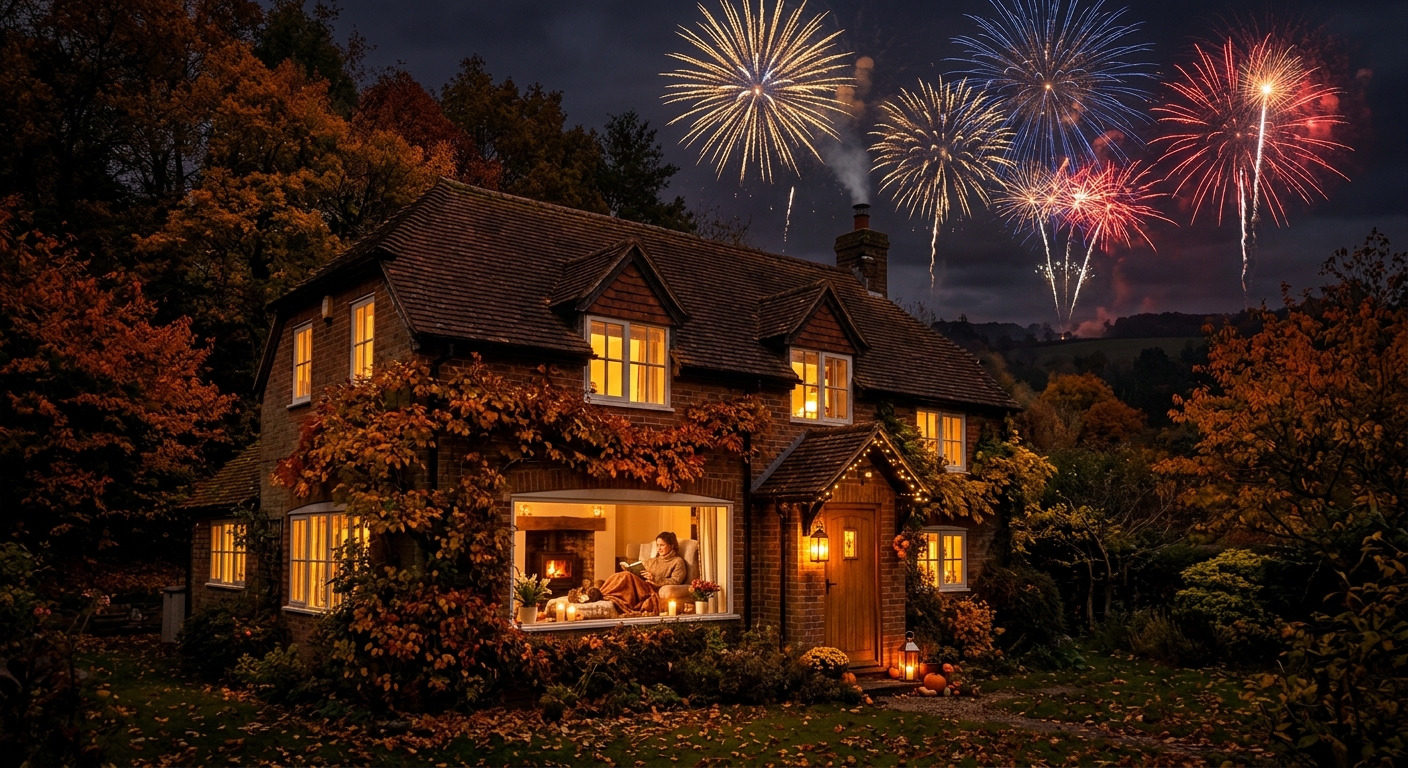
Even though the 5th November has come and gone, households across the UK still endure the traditional gatherings of Bonfire Night. However, for shift workers, light sleepers, families with young children, and pet owners, Guy Fawkes night and the surrounding week can present a challenge: persistent, high-decibel noise pollution.
A high-grade commercial firework can blast sound levels well over 110 to 120 decibels at close range—approaching the threshold of physical discomfort. Even at a distance, sudden explosive pops and low-frequency sonic thuds easily penetrate standard single-pane windows.
Modern double glazing serves as an advanced acoustic shield, keeping your living space quiet and serene even during peak celebrations.
The Physics of Sound Transmission Through Windows
Sound is acoustic energy travelling through the air as compression waves (vibrations). When an explosion occurs outside, the resulting sound wave hits the exterior window pane, therefore causing the glass to flex and vibrate.
- Single Glazing: A single sheet of 4mm float glass acts as a direct membrane. The outer vibration transfers straight through the glass, causing the air on the inside of your room to vibrate with minimal energy loss. Evolution Windows
- Double Glazing: Double-glazed units introduce a multi-tiered defence system. Rather than striking one solid boundary, sound waves must conquer two distinct physical barriers separated by an insulated cavity.
[ Outside Fireworks ] ---> [ Outer Glass Pane ] ---> [ Argon Gas Gap ] ---> [ Inner Glass Pane ] ---> [ Quiet Interior ]
Key Acoustic Benefits of Double Glazing
1. The Damping Air Gap
Between the two glass panes lies a sealed cavity, typically filled with Argon gas. Argon is denser than ambient air, which slows down sound waves as they pass through the gap. The gas acts as a buffer cushion, absorbing acoustic energy and significantly dampening the vibration before it reaches the interior pane.
2. Disruption via Asymmetric Glass (Dissimilar Thicknesses)
Sound waves travel through materials at specific resonance frequencies. If a window uses two panes of identical thickness (e.g., 4mm + 4mm), both panes resonate at the exact same frequency, allowing sound energy to transfer easily across.
Acoustic double glazing frequently uses asymmetric glazing—combining a 4mm outer pane with a 6mm or 8mm inner pane. Because each pane vibrates at a different natural frequency, the inner pane acts as a dampener to the vibrations transmitted by the outer pane, breaking up sound waves much more effectively.
3. Laminated Acoustic Inter-layers
For ultimate sound isolation against explosive noises, modern units employ acoustic laminated glass. This involves sandwiching a microscopic layer of Polyvinyl Butyral (PVB) acoustic film between two sheets of glass. The viscoelastic PVB interlayer acts as a shock absorber, converting acoustic vibration directly into harmless thermal energy.
4. Airtight Perimeter Engineering
Sound travels through air like water through a sieve; even tiny micro-gaps around a window frame allow sound waves to leak directly into the home. Modern uPVC, composite, or aluminium double-glazed windows incorporate multi-point locking systems and high-grade weather seals that create an airtight perimeter seal when closed.
Decibel Impact: Standard Double vs. Acoustic Double Glazing
To put sound reduction into perspective, a reduction of 10 dB is perceived by the human ear as cutting the noise level in half.
| Window Type | Typical Sound Reduction (Rw) | Perceived Noise Level Inside (85 dB Fireworks display) |
|---|---|---|
| Single Glazing (4mm) | ~20–22 dB | ~63–65 dB (Loud conversation / Television) |
| Standard Double Glazing (4/12/4) | ~28–32 dB | ~53–57 dB (Moderate indoor background conversation) |
| Acoustic Laminated Double Glazing | ~38–44 dB | ~41–47 dB (Quiet library / Soft whisper level) |
Why Firework Noise is Uniquely Difficult (And How Acoustic Windows Help)
Firework displays generate two types of noise simultaneously:
- High-Frequency Crackles & Whistles: Easily blocked by the dual-pane barrier and tight frame seals.
- Low-Frequency Explosive Thuds (“Bass Bombs”): Deep booms (below 100 Hz) carry long wavelengths that cause solid structural elements to shake.
Standard double glazing dulls high-pitched pops, but upgrading to asymmetric panes with wider air gaps (16–20mm) and PVB lamination specifically targets these low-frequency acoustic pressures, preventing the heavy bass thuds from rattling your room.
Tips to Maximise Noise Reduction on Bonfire Night
Even with double glazing installed, you can take a few extra steps to ensure complete quiet:
- Close All Trickle Vents: Trickle vents provide essential background ventilation, but on Bonfire Night, close acoustic vents temporarily to seal off any direct airborne noise paths.
- Draw Heavy, Thermal Curtains: Floor-length, high-density drapes add another layer of soft absorption, reducing residual sound reflection off indoor surfaces. Feather & Grey Interiors
- Check Window Gaps: Inspect window rubber gaskets before winter. If draughts or light can pass through, sound can too. Replacing worn perimeter seals recovers maximum acoustic performance.
Why not chat to us and see how Glazing Masters can help insulate your home both thermally and acoustically! Contact us now.